How I accidentally created a digital Hollywood studio while trying to avoid writer’s block
The Idea That Started It All
Staring at blank pages with cardboard-cutout characters got old fast. As someone who loves storytelling but hates writing linearly, I kept thinking: “What if I could actually talk to my characters? What if I could be like a film producer, working with a team instead of going it alone?”
Imagination Land is an agentic AI story creation platform where users act as Hollywood producers interfacing with a director AI component to coach actor AI agents, orchestrate scenes, and generate multi-format narrative content across various storytelling mediums. Most writing tools are glorified text editors. AI assistants either felt generic or tried to replace me entirely. I didn’t want replacement—I wanted collaborators. So, like any reasonable indie developer, I built exactly what I wished existed.
The “Aha!” Moment: Making AI Feel Human
The breakthrough came when I stopped thinking about AI as a tool and started treating it like a creative team. What if each character had their own AI “actor” who could stay in character? What if there was an AI “director” who understood story structure? What if I could be the producer, guiding the vision while letting my digital team handle the heavy lifting?
This wasn’t just about generating text—it was about creating a genuine creative collaboration. Each AI actor remembers our conversations, learns from feedback, and actually gets better at being their character over time. It’s honestly a bit eerie how well it works.
Building the Dream Team (Digitally Speaking)
Characters That Actually Have Personality
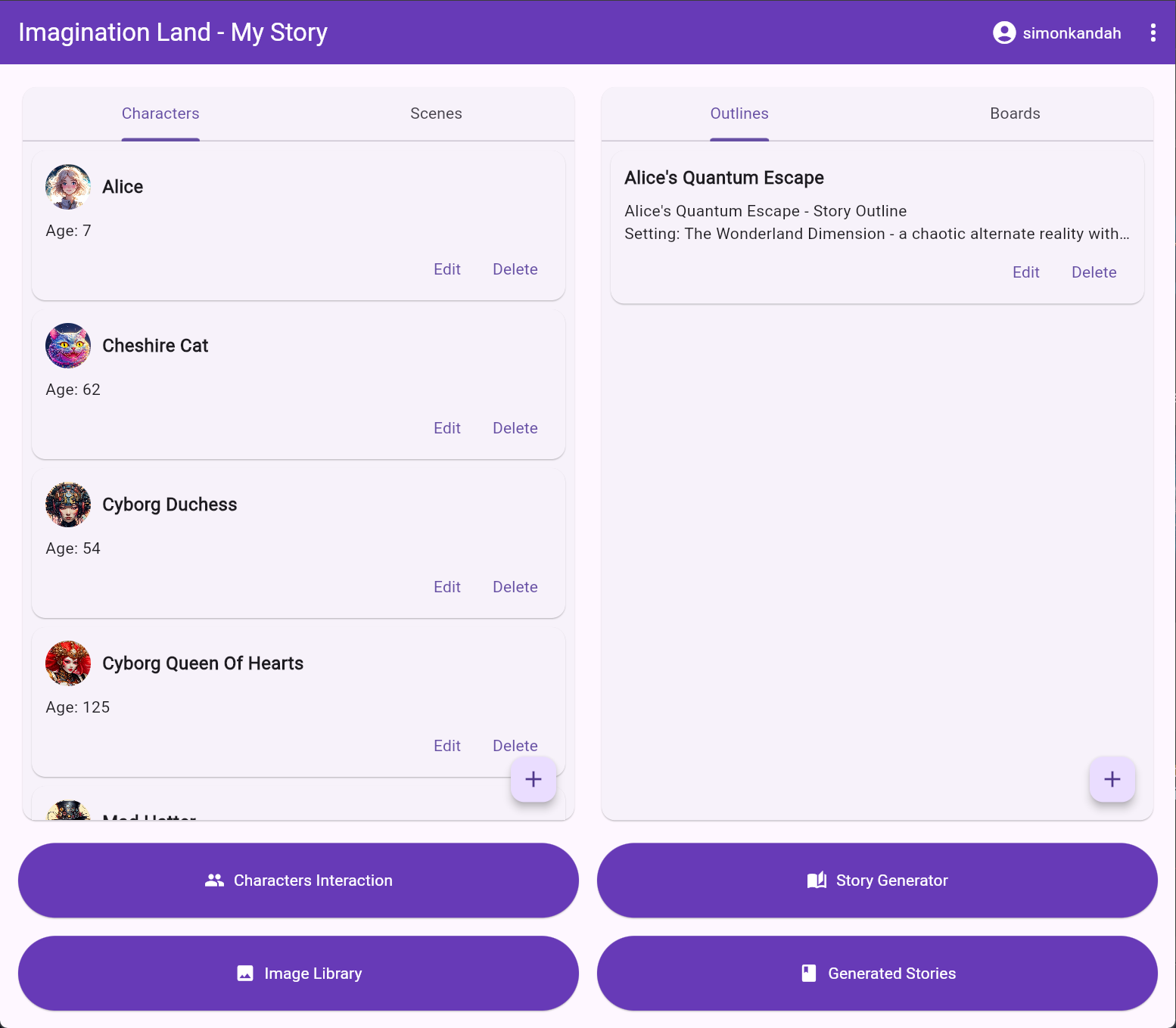
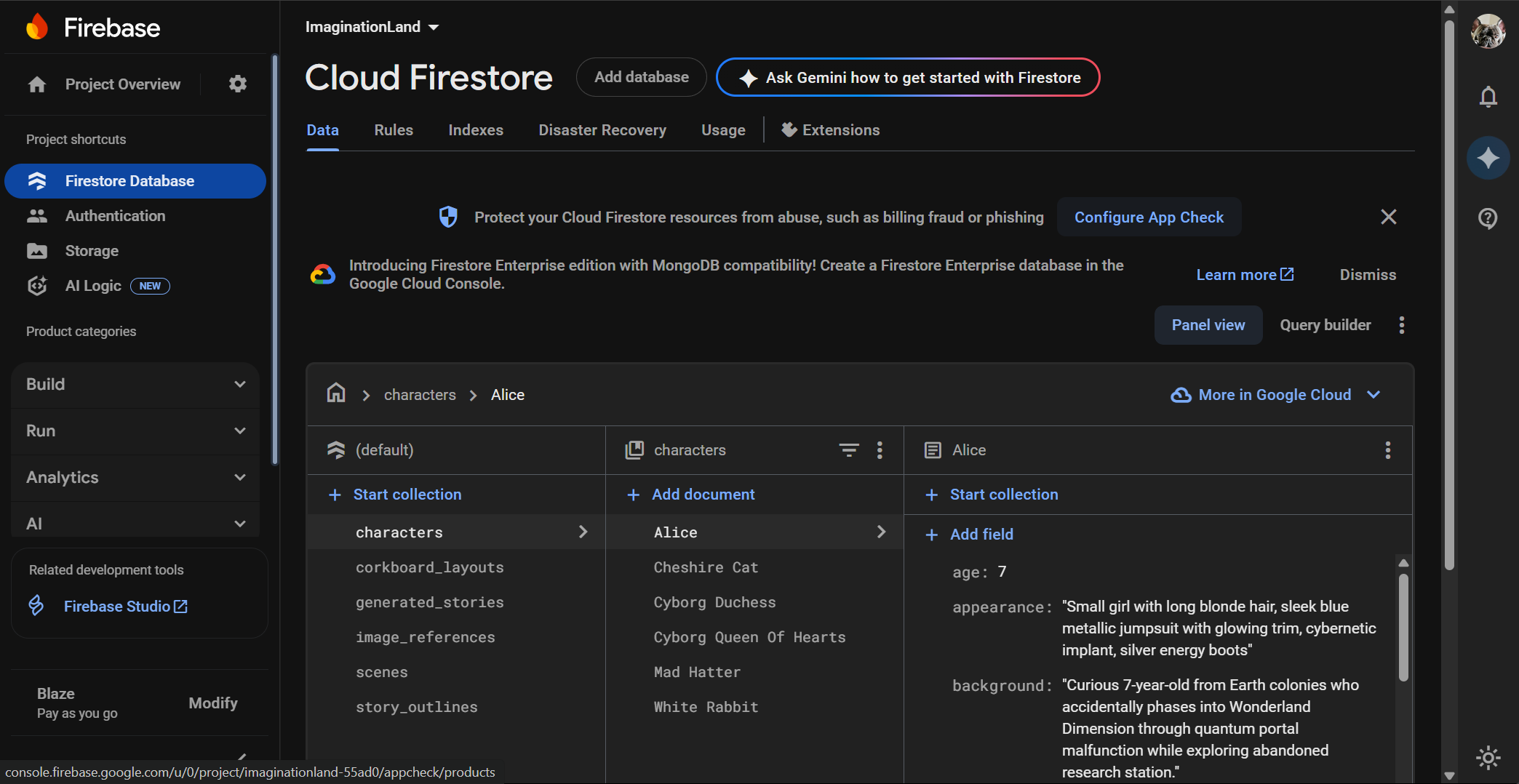
Creating characters in Imagination Land feels more like casting actors than filling out forms. Each character gets:
- A detailed personality that goes way beyond “brave hero” or “evil villain”
- Visual descriptions that work with AI image generation (because why not?)
- Memory of every conversation we’ve had (creepy but useful)
- The ability to surprise me with responses I didn’t expect

The Actor GPT system lets me interview characters, coach them on motivations, and even have them argue with each other. I’ve had characters suggest plot directions I never considered. It’s like having a writers’ room where nobody fights over coffee or steals your lunch. You can also define scenes with different contexts. The same location at different times or under different circumstances can have the environment be another actor to influence character behavior and dialogue. Rainy scenes feel different from sunny ones, and not just because I said so.

The Corkboard: Where Stories Come Alive
Remember those detective movies where they pin photos and notes to a board with red string connecting everything? That’s basically what I built, but digital and without the risk of looking like a conspiracy theorist.
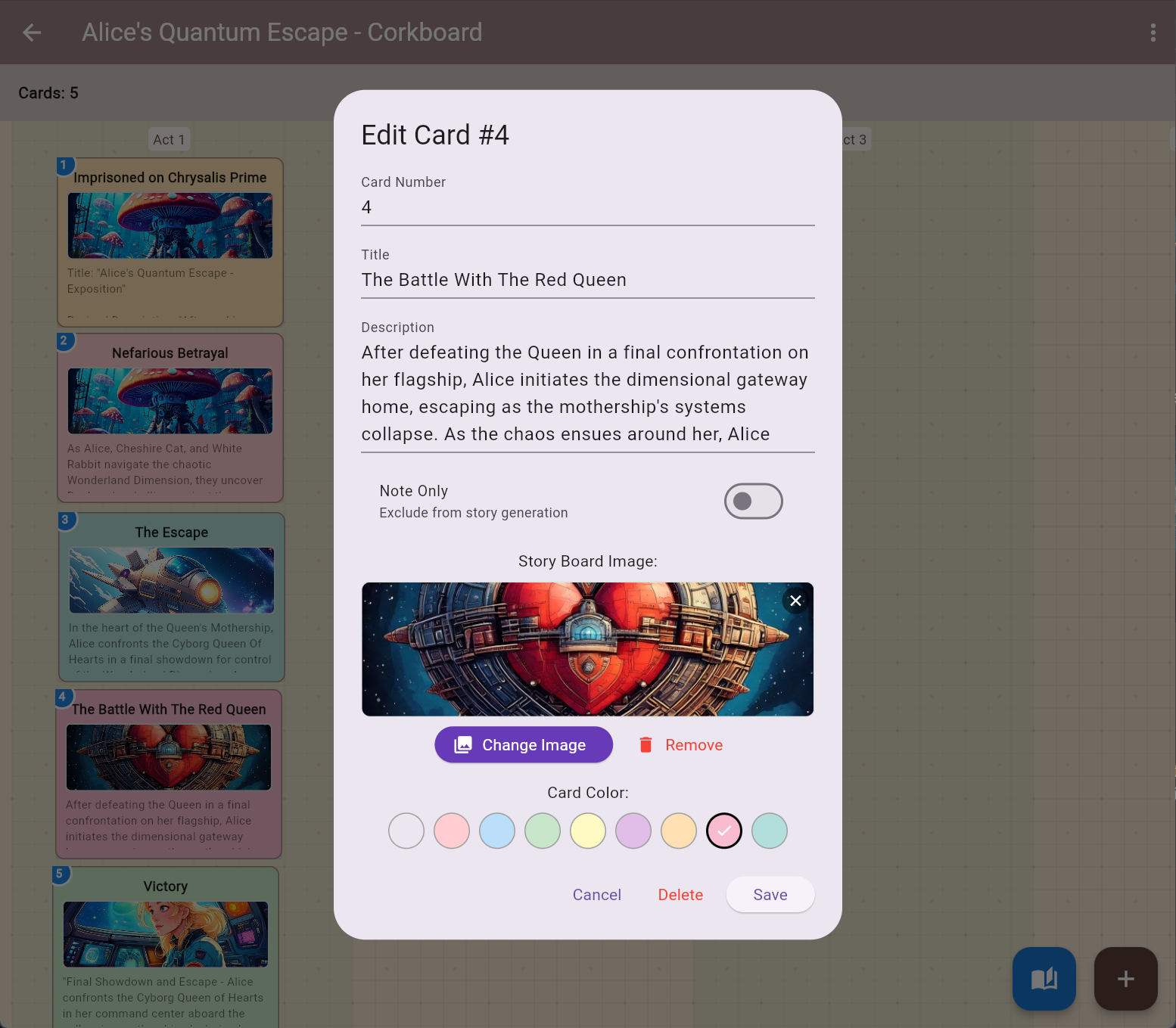
Story beats are visual cards you can drag around, rearrange, and connect. Characters and scenes get little sticker indicators so you can see at a glance who’s involved and where things happen. It’s like playing with story Legos, except these Legos can generate themselves into full narratives.
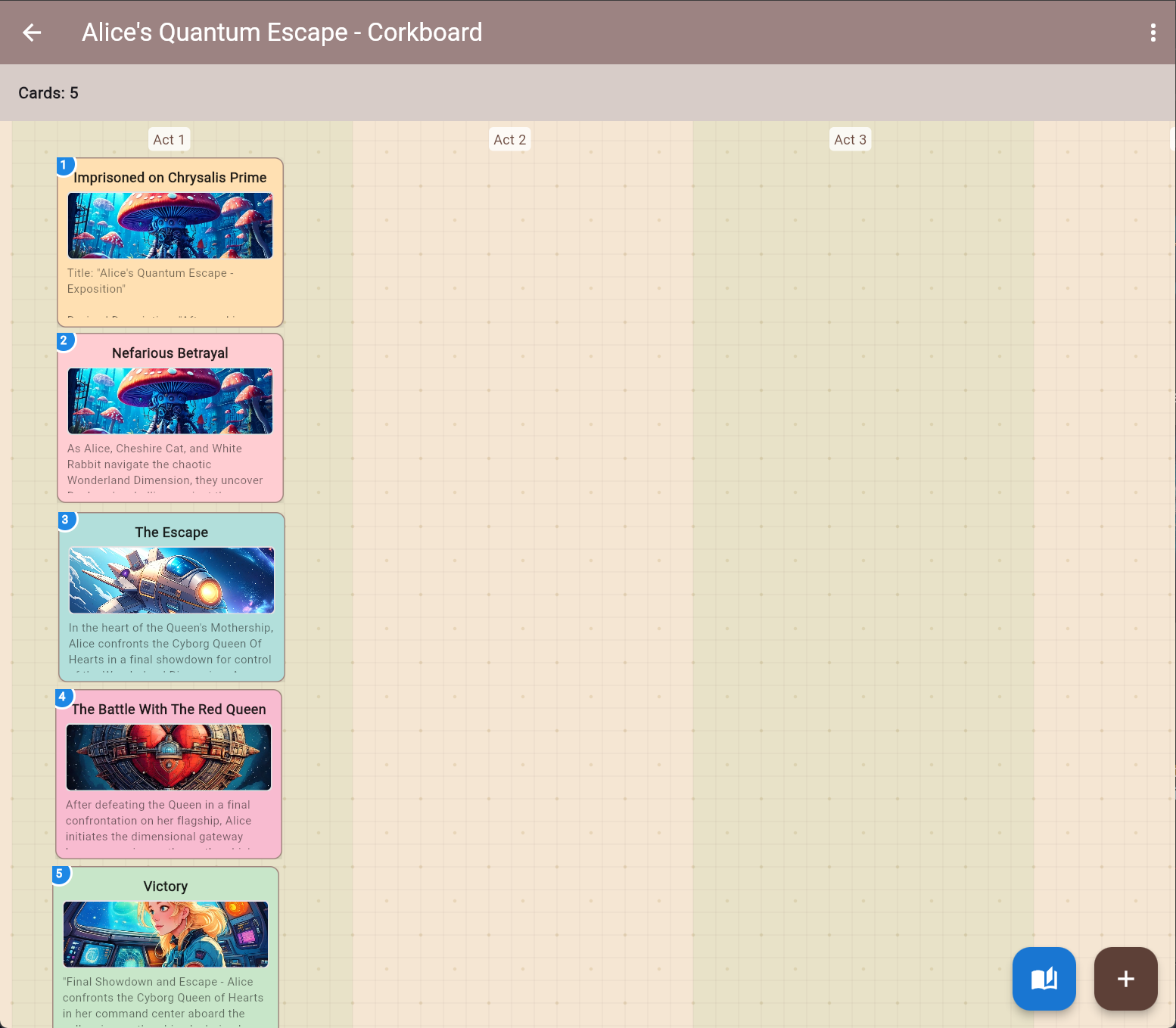
To be honest, this is my favorite screen—you can see pacing, story arcs, and critical events at the right level. There’s something satisfying about physically moving story pieces around until they click into place.
The AI Director: My Digital Scorsese
The Director GPT is probably where I got a bit carried away (shocking, I know). This isn’t just “write me a story”—it’s a sophisticated system that understands different formats and adapts accordingly:
- Novels get rich internal monologue and detailed descriptions
- Graphic novels focus on visual storytelling with precise panel layouts
- Screenplays follow industry formatting (because I’m a stickler for details)
- Comics/webtoons optimize for speech bubbles and visual pacing

The Director remembers everything about your characters and scenes, understands the story beats you’ve planned, and can generate content that actually feels like it belongs in your world. It’s like having a collaborator who never gets tired, never has creative blocks, and doesn’t judge your questionable plot choices.
Export Features (Because What Good Is a Story If It’s Trapped?)
Here’s where my perfectionist tendencies really show. The export system doesn’t just dump text into a file—it creates production-ready content:
- Text files with proper formatting for each story type
- JSON data for panel generation in ComfyUI workflows and developers who want to build on top of the stories
- Coordinate layouts for graphic novels (6×9 aspect ratio with proper gutters)
- AI image generation integration for visual content
- Character reference sheets for maintaining visual consistency
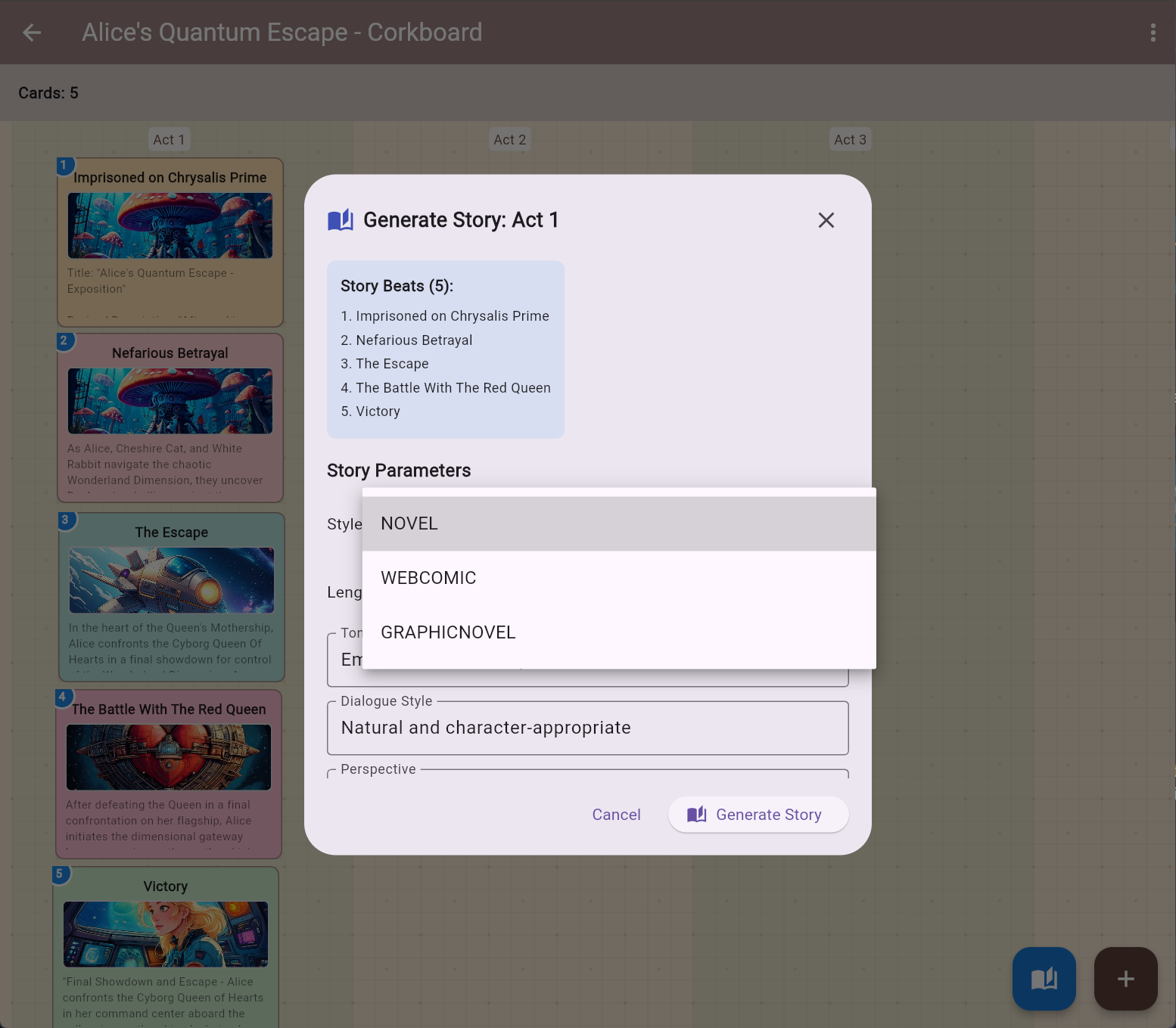
The graphic novel export even calculates panel coordinates automatically. Because apparently I thought, “You know what this project needs? Geometry.”
Technical Stuff (For Fellow Code Nerds)
Built with Flutter because I wanted it to work everywhere—web, mobile, desktop, probably smart fridges if I tried hard enough. Firebase handles the backend because I’d rather spend time on features than server maintenance.
The AI integration was the trickiest part. Multiple GPT models working together, context management to keep characters consistent, and enough error handling to survive my questionable API usage patterns. The character memory system alone probably has more edge cases than should be legally allowed.
Real-World Use Cases (It’s Not Just For Me!)
Turns out other people like to create stories too:
Children’s book authors can use it to test dialogue with kid characters and generate visual descriptions for illustrators. Comic creators can enjoy the panel layout calculations and character consistency features. Screenwriters use the character interview system to develop authentic voices before writing dialogue.
Game developers could prototype dialogue trees by having characters argue with each other. And yes, some people just use it because talking to AI characters is genuinely fun.
The “Why” Behind the Build
I didn’t set out to revolutionize storytelling—hehe, I really just wanted to see AI hold a virtual improv session. Traditional writing tools felt too linear, too isolated. I wanted the energy of a collaborative creative process without having to coordinate schedules or argue about whose turn it is to buy coffee.
Every feature exists because I was inspired and thought, “This feels right.” The character memory system? Born from frustration with AI that forgot what we discussed five minutes ago. The corkboard? Because I’m a visual thinker who needs to see the big picture. The multi-format export? Because I got tired of reformatting the same story for different mediums.
What’s Next (Because I Can’t Leave Well Enough Alone)
The roadmap includes some ambitious ideas: a companion app for presenting the generated stories with visuals and audio, multi-user collaboration for writing teams, and probably way too many features that seem like good ideas at 2 AM.
Better image generation and integration. Audio coaching/integration is on the list (AI voice acting, anyone?), along with better analytics for understanding what makes stories work. And yes, I’m working on supporting multiple stories instead of just one, because apparently some people write more than one thing at a time.
The Honest Truth
Imagination Land represents everything I love about indie development: scratching your own itch, building something that doesn’t exist yet, and probably going way overboard in the process. It’s not perfect, it’s definitely over-engineered in places, and I’ve probably spent more time on polish than any reasonable person should.
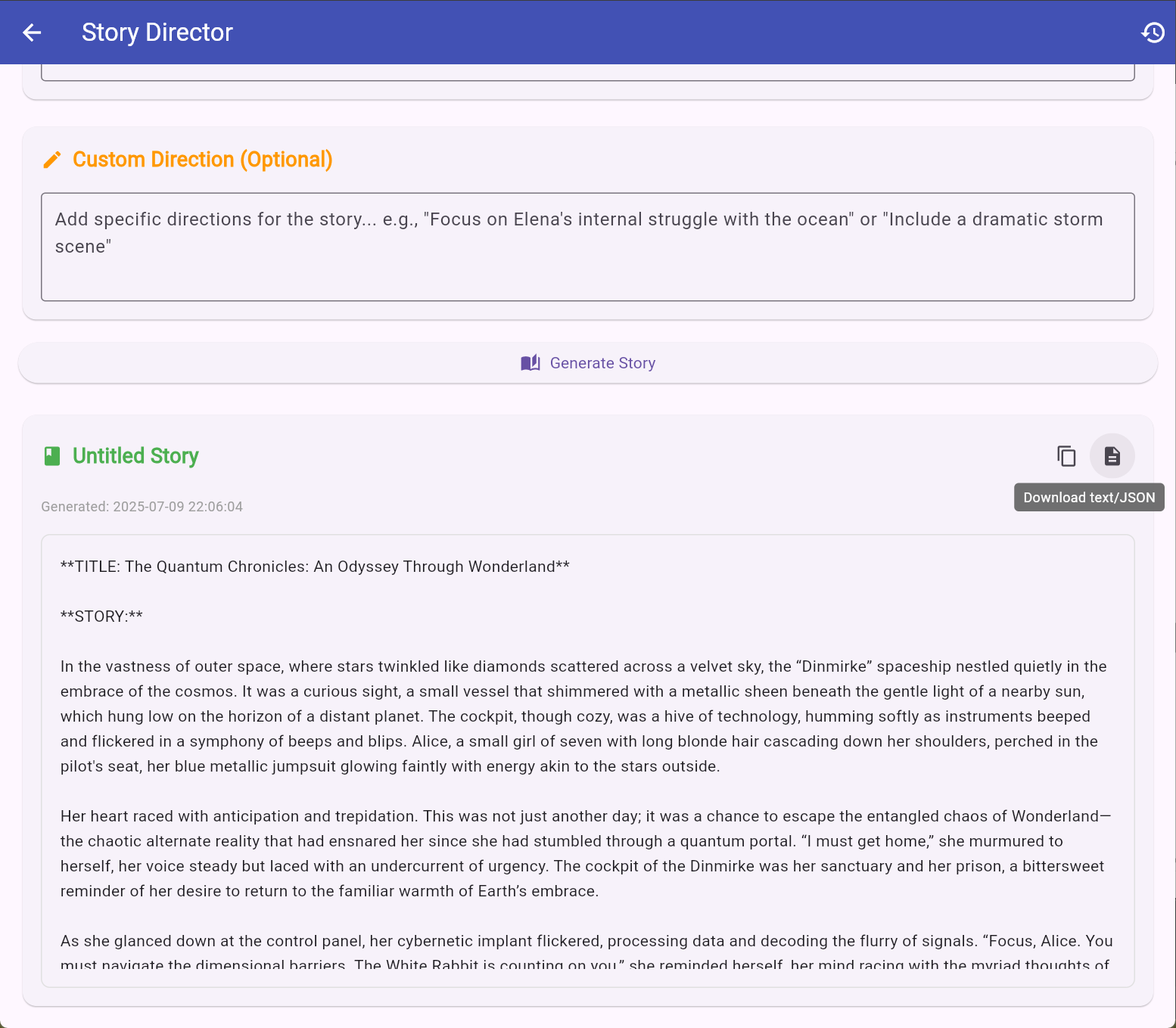
But it works – judge for yourself – take a look at the above short story generated for an Alice In Wonderland Alternate Universe. Imagination Land actually, genuinely helps with the creative process in ways I didn’t expect. Characters feel real, stories flow naturally, and the whole experience feels more like playing than working. Which, honestly, was the point all along.
Building this taught me that the best development projects aren’t about using the latest frameworks or impressing other developers—they’re about solving real problems in ways that feel almost like magic, even if you know exactly how the magic works.
Built with Flutter, Firebase, and an unreasonable amount of caffeine. Powered by OpenAI’s GPT models and the stubborn belief that creative software should actually help with creativity.